

Atlanta Personal Injury Attorneys
Atlanta Car Accident Lawyer
Aggressive representation for crash victims across Metro Atlanta. $55 million+ recovered. No fee unless we win.
Aggressive Representation for Atlanta Car Accident Victims
A serious car crash on I-285 or the Downtown Connector can change your life in seconds. Medical bills start arriving before you've left the hospital. The at-fault driver's insurance carrier calls within 48 hours offering a quick settlement. Your car is totaled, you're missing work, and the path to full recovery feels uncertain.
The Atlanta car accident lawyers at Sanabria Injury Law have recovered more than $55 million for injured clients across Metro Atlanta. We handle every aspect of your claim, from accident investigation through final settlement or trial verdict, while you focus on healing. You work directly with the attorney handling your file from the first call through the resolution of your case. Consultations are free, available 24 hours a day in English, Spanish, and Portuguese, and you pay nothing unless we recover compensation on your behalf.
What an Atlanta Car Accident Lawyer Actually Does for You
Insurance carriers are not on your side. Their adjusters are trained to minimize what they pay. Studies consistently show that injury victims represented by an attorney recover substantially more than those who handle claims on their own.
A car accident lawyer takes over the four areas where claims succeed or fail:
- Investigation. Gathering the police report, securing surveillance footage before it's overwritten, interviewing witnesses, and reconstructing the crash.
- Valuation. Calculating the full scope of economic and non-economic damages, including future medical care and lost earning capacity.
- Negotiation. Dealing directly with insurance adjusters so you never give a recorded statement that could damage your claim.
- Litigation. Filing a lawsuit and trying the case to a jury when carriers refuse to negotiate fairly.
The firms that achieve the highest settlements are the ones insurance carriers know are willing and prepared to try a case. We build every case as if it will go to a jury. That preparation is what drives carriers to negotiate seriously.
Common Causes of Atlanta Car Accidents
Metro Atlanta's road network creates conditions where serious crashes happen daily. The I-75/I-85 Downtown Connector handles more than 340,000 vehicles per day. GA-400, I-285, and the surface arteries through Buckhead, Midtown, and the Perimeter compound congestion with high speeds, frequent merging, and heavy commercial traffic.
The leading causes of crashes our firm handles include:
| Cause | What It Looks Like |
|---|---|
| Distracted driving | Texting, smartphone use, GPS interaction, eating behind the wheel |
| Speeding | Particularly on I-285, GA-400, and the Downtown Connector |
| Impaired driving | Alcohol, recreational drugs, or prescription medication |
| Failure to yield | At intersections, merge points, and unprotected left turns |
| Reckless driving | Aggressive lane changes, tailgating, weaving through traffic |
| Drowsy driving | A particular factor on long-haul corridors and overnight commutes |
| Weather and road conditions | Rain, fog, and poorly maintained surfaces |
When a crash involves a commercial driver, a trucking company, or a rideshare vehicle, additional layers of liability and insurance coverage come into play. We investigate every angle to identify all responsible parties.
Types of Car Accidents We Handle
Our firm represents victims of every category of motor vehicle collision that occurs on Metro Atlanta's roads. Each type presents distinct challenges in proving liability and calculating damages.
Rear-End Collisions
Rear-end collisions are among the most common crashes in Atlanta and a primary cause of whiplash, herniated discs, and traumatic brain injuries. While the trailing driver is usually at fault, these cases can involve sudden lane changes, brake-checking, or chain-reaction pile-ups.
T-Bone and Intersection Accidents
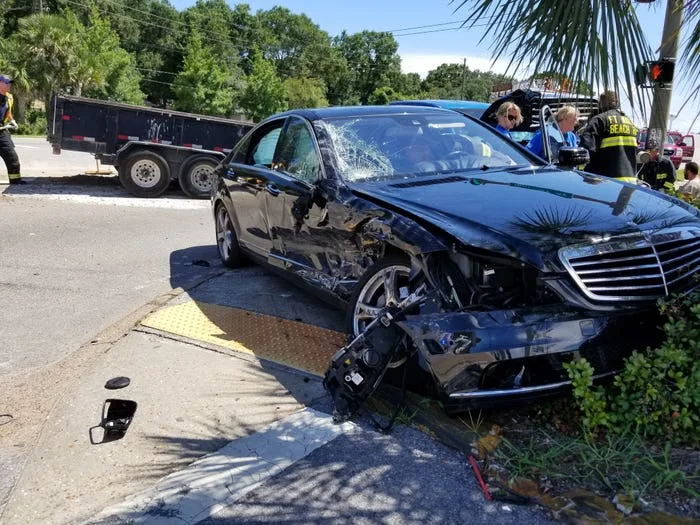
T-bone and intersection accidents typically occur when one driver runs a red light or fails to yield. Side-impact crashes are particularly dangerous because the side of a vehicle offers far less protection than the front or rear.
Head-On Collisions
Head-on collisions are the deadliest type of motor vehicle crash. Even with modern safety features, the combined force of two vehicles meeting head-on frequently causes catastrophic injuries or wrongful death.
Multi-Vehicle Pile-Ups
Multi-vehicle pile-ups are common on high-speed corridors including I-85, GA-400, and the Downtown Connector. These cases involve multiple drivers, multiple insurance policies, and competing theories of liability.
Hit-and-Run Accidents
Hit-and-run accidents leave victims wondering how to recover when the at-fault driver flees. Georgia uninsured motorist coverage provides a path to compensation when the responsible driver cannot be identified.
Rideshare Accidents (Uber and Lyft)
Rideshare accidents involving Uber and Lyft add complexity around driver status, app usage, and which insurance tier applies. Rideshare carriers maintain commercial policies up to $1 million, but accessing those funds requires understanding the specific coverage that applies at each stage of a ride.
We also handle motorcycle accidents, pedestrian and bicycle collisions, and crashes involving large commercial trucks. Each has dedicated practice page coverage.
Georgia Car Accident Law: What Actually Applies
Georgia is an at-fault state, not a no-fault state. The driver responsible for causing a crash is liable for the damages. This is a critical distinction that affects every aspect of your claim.
Minimum Insurance Requirements
Every Georgia driver is required to carry liability insurance with minimum limits of $25,000 for bodily injury per person, $50,000 per accident, and $25,000 for property damage. These minimums frequently fall short of covering serious injury costs, which is why uninsured and underinsured motorist coverage on your own policy matters.
Modified Comparative Negligence
Georgia follows a modified comparative negligence rule under O.C.G.A. §51-12-33. If your share of fault is 50 percent or more, you recover nothing. If your share is less than 50 percent, you can recover damages, but your award is reduced by your fault percentage. On a $200,000 verdict with 20 percent fault assigned to you, the recovery is $160,000.
Insurance defense lawyers spend significant resources trying to push your fault percentage upward, because every percentage point reduces what they pay. Aggressive defense against fault inflation is one of the most important parts of a strong case.
Statute of Limitations
Under O.C.G.A. §9-3-33, you generally have two years from the date of the accident to file a personal injury lawsuit and four years to file for property damage. Claims against government entities involve shorter notice deadlines, sometimes as short as six months. Missing the deadline typically forfeits your right to compensation entirely.
Compensation You Can Recover
Georgia law recognizes three categories of damages in a car accident case. The compensation you ultimately receive depends on the severity of your injuries, the strength of the evidence, the at-fault party's conduct, and the available insurance coverage.
Economic damages cover financial losses you can document. These include emergency room and hospital costs, surgical and rehabilitation expenses, future medical care, lost wages from time missed at work, lost earning capacity if your injury prevents you from returning to your previous role, vehicle repair or replacement, and out-of-pocket expenses such as transportation to medical appointments.
Non-economic damages compensate for losses that do not appear on a receipt: physical pain, emotional distress, loss of enjoyment of life, disfigurement, and loss of consortium for the impact on your relationship with your spouse. Georgia does not cap non-economic damages in standard car accident cases.
Punitive damages apply when the at-fault driver's conduct was willful, malicious, or showed conscious indifference to consequences. Drunk driving cases frequently support punitive claims. Under O.C.G.A. §51-12-5.1, punitive damages in most cases are capped at $250,000, with no cap in DUI cases.
| Damage Type | What It Covers | Typical Evidence |
|---|---|---|
| Economic | Medical bills, lost wages, vehicle repair, future care | Bills, pay stubs, expert reports |
| Non-Economic | Pain, suffering, emotional distress, loss of enjoyment | Client testimony, family testimony, medical records |
| Punitive | Punishment for DUI or grossly negligent conduct | Toxicology, prior convictions, conduct evidence |
What to Do After a Car Accident in Atlanta
The decisions you make in the first 48 hours after a crash shape the value of your case for the next two years.
Call 911. Any Georgia accident involving injury, death, or property damage over $500 must be reported to law enforcement under O.C.G.A. §40-6-273. The police report becomes a foundational document in your claim.
Get medical attention as soon as possible. Even if you feel fine, internal injuries and soft-tissue damage often don't surface until days after a crash, so a documented same-day or next-day medical visit creates the foundation your damages claim will rely on. If you didn't go the same day, don't assume your case is over. Delayed treatment can be explained, especially when adrenaline masks symptoms in the hours after a crash, but the sooner you're evaluated, the harder it is for an insurer to argue your injuries came from something else.
Document the scene if you are physically able. Photograph vehicle damage, road conditions, weather, traffic signals, skid marks, and any visible injuries. Get names and phone numbers of witnesses before they leave.
Exchange information with the other driver. Names, license plate numbers, insurance carriers, and policy numbers. Do not discuss fault. Even simply saying "I'm sorry" can be viewed as an admission of fault.
Decline recorded statements to the at-fault driver's insurance company. You have a contractual obligation to notify your own insurer. You have no obligation to give a recorded statement to the other side, and doing so almost always hurts your case. Your attorney can handle this part for you, and in almost every case it is best to let them open all claims associated with your case. Insurance companies frequently use claim opening to get the injured party to say something they can use against them later, even if it is your own insurance company.
Call an attorney before accepting any settlement offer. Quick offers from carriers are almost always below case value. The insurance company knows that settling directly with you will be the cheapest they ever settle that claim for, and they try to take full advantage of the window before a claimant is represented. Sanabria Injury Law offers free consultations 24 hours a day in English, Spanish, and Portuguese. Call (678) 855-7117 to speak directly with the attorney who would handle your case.
Common Car Accident Injuries
Car accidents cause injuries ranging from soft tissue strain to permanent disability. The severity of the injury directly affects case value, which is why thorough medical documentation from day one matters.
- Whiplash and soft tissue injuries are common in rear-end collisions and may seem minor at first. Untreated, they can cause chronic pain and limited mobility for years.
- Traumatic brain injuries can occur even without direct head impact. Symptoms range from headaches and memory problems to severe cognitive and personality changes. Many TBIs do not show on a standard CT scan, which is why specialized evaluation matters.
- Spinal cord injuries can result in partial or complete paralysis. Lifetime medical costs frequently reach into the millions of dollars.
- Herniated discs and back injuries often require surgical intervention and may limit a victim's ability to work for the rest of their life.
- Broken bones and fractures range from simple breaks to compound fractures requiring surgery and extended rehabilitation. Fractures involving joints can lead to lifelong arthritis.
- Internal injuries and organ damage are not always immediately visible and can be life-threatening. They typically require emergency surgery.
- PTSD and psychological injuries are compensable damages under Georgia law. The emotional toll of a serious crash is recognized harm.
Why Choose Sanabria Injury Law for Your Atlanta Car Accident Case
Sanabria Injury Law has recovered more than $55 million for injured clients across Metro Atlanta. Founding partner Shayne Sanabria personally oversees every case. You will never be passed off to a paralegal or junior associate. We respond promptly, explain every option in plain language, and treat each client the way we would want a member of our own family to be treated. We build long-standing relationships with our clients that last far beyond the resolution of their case.
Your case, and your injuries, will be handled differently than every other case that our firm has handled in the past, and will handle in the future. No two cases are the same and no two cases are ever handled as such.
We work entirely on contingency. No upfront costs. No hidden fees. No financial risk. Free consultations are available 24 hours a day in English, Spanish, and Portuguese. If you have been injured in a car accident anywhere in Atlanta, Alpharetta, Sandy Springs, Decatur, Marietta, Johns Creek, or the surrounding communities, contact us today.
You Have Questions
We Have Answers
Under O.C.G.A. §9-3-33, you generally have two years from the date of the accident to file a personal injury lawsuit and four years for property damage. Claims involving government vehicles or government entities have shorter notice deadlines, sometimes as short as six months. The sooner you contact an attorney, the more time we have to investigate, preserve evidence, and build your case.
Georgia follows a modified comparative negligence rule under O.C.G.A. §51-12-33. As long as your share of fault is less than 50 percent, you can still recover damages, though your award is reduced by your fault percentage. Insurance carriers actively push to inflate your fault percentage because every percentage point reduces what they pay. Aggressive defense against fault inflation is one of the most important parts of a strong case.
No. Insurance adjusters are trained to ask questions designed to elicit statements that reduce or eliminate your claim. You have no legal obligation to give a recorded statement to the at-fault driver's insurance carrier. Politely decline and refer them to your attorney. Sanabria Injury Law handles all communication with insurance companies on your behalf.
Case value depends on the severity of your injuries, the documented medical costs, lost wages, the long-term impact on your life, the at-fault driver's conduct, and the available insurance coverage. Catastrophic injuries with permanent disability or wrongful death cases command the highest settlements. Soft tissue injuries that heal completely settle for less. Free consultations include a preliminary case value range based on the specifics of your situation.
Yes. Many serious injuries, including traumatic brain injuries, internal injuries, and spinal damage, do not show obvious symptoms in the first hours or days after a crash. A lawyer ensures injuries are properly documented and that you do not accept a quick settlement that fails to cover future medical needs. Insurance carriers know that unrepresented victims accept far less than represented ones.
Georgia law requires drivers to carry minimum liability coverage of $25,000 per person, but those minimums often fall short of covering serious injury costs. If the at-fault driver had no insurance or insufficient coverage, your own uninsured/underinsured motorist (UM/UIM) coverage may pay the difference. We also investigate whether the driver was acting within the scope of employment, which can open a claim against an employer's commercial policy.
Most cases resolve within six to eighteen months. Cases that settle pre-litigation move fastest. Cases that require filing a lawsuit, conducting discovery, and reaching trial can take eighteen to thirty-six months. Catastrophic injury and wrongful death matters often take longer because the full medical picture takes time to develop. We are transparent about the timeline from day one and never rush a case to a low settlement just to close it.

Injured in a Car Accident? Get Your Free Consultation
No fee unless we recover for you. Contact our Atlanta car accident attorneys 24/7.