

Atlanta Personal Injury Attorneys
Traumatic Brain Injury Attorneys
Atlanta TBI lawyers fighting for traumatic brain injury victims with expert medical testimony and life care planning.
Atlanta Traumatic Brain Injury Lawyers Securing Life-Changing Compensation
A traumatic brain injury changes life in an instant. One moment is ordinary; the next brings cognitive difficulty, personality change, chronic pain, and an uncertain future for the injured person and everyone who depends on them. TBIs are among the most complex injuries in personal injury law, and their true cost usually extends far beyond what is visible in the first days after the event. The Atlanta traumatic brain injury lawyers at Sanabria Injury Law have recovered more than $55 million for injured clients across Metro Atlanta.
These cases are won on medical evidence and expert testimony, not on argument alone. We work with neurologists, neuropsychologists, neuroradiologists, and life care planners to document the full scope of the injury and translate it into a damages case a jury can see and value. You work directly with the attorney handling your file from the first call through resolution. Consultations are free, available 24 hours a day in English, Spanish, and Portuguese, and you pay nothing unless we recover compensation on your behalf.
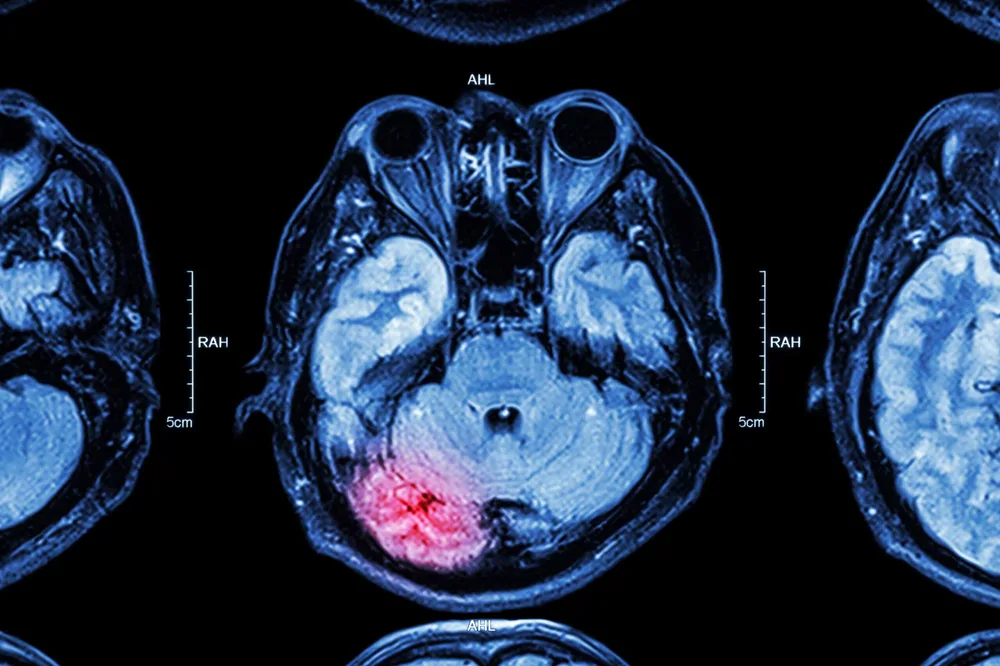
Types of Traumatic Brain Injuries
Brain injuries range from mild concussions to catastrophic, permanent damage, and the type and severity drive both the treatment and the value of the claim. The categories below cover the injuries we most often see in auto, trucking, and fall cases across Metro Atlanta.
| Injury Type | How It Happens | Why It Matters |
|---|---|---|
| Concussion (mild TBI) | Rapid acceleration or a blow in a crash, fall, or sports impact | "Mild" in name only. Post-concussion syndrome and repeat concussions carry lasting-symptom and CTE risk. |
| Cerebral contusion | Direct impact bruising the brain, including coup-contrecoup in high-speed collisions | Localized bleeding and swelling. Severe cases need surgery to relieve intracranial pressure. |
| Diffuse axonal injury (DAI) | Violent rotational force tearing nerve fibers, common in trucking and high-speed wrecks | Among the most severe TBIs. Frequently causes coma and permanent impairment. |
| Penetrating injury | An object pierces the skull, from gunshots, debris, or industrial accidents | Almost always permanent damage to the affected region and frequently life-threatening. |
| Anoxic or hypoxic injury | Oxygen loss in near-drowning, surgical error, or birth injury | No external trauma required. Minutes without oxygen can cause irreversible damage and may involve medical negligence. |
Classifying the injury correctly is not academic. The label a treating physician assigns, and the imaging and testing that support it, determine which damages are recoverable and how a jury will understand what the injury took from you.
Why Brain Injuries Get Missed and Disputed
The central challenge in a brain injury case is that the most damaging injuries are often the hardest to see. A standard CT scan taken in the emergency room is built to find bleeding and fractures, not the microscopic shearing of nerve fibers that underlies many concussions and moderate injuries. Clients are frequently discharged with a normal CT and no documented brain injury, only to develop memory problems, mood changes, and cognitive fog over the following weeks.
That gap is exactly where insurers attack. If the night-of imaging is clean and treatment was delayed, the defense argues the injury is exaggerated or unrelated. Winning requires the right evidence: MRI and diffusion tensor imaging that detect white-matter damage a CT misses, neuropsychological testing that quantifies deficits in memory and processing speed, and early neurological referral that ties the symptoms to the event. The cases that recover full value are the ones where that workup starts early, not months later.
Delayed treatment does not end a case. It can be explained, especially when adrenaline masks symptoms in the hours after a crash. But the sooner the injury is evaluated and documented, the harder it is for an insurer to argue it came from something else.
Long-Term Effects of Traumatic Brain Injury
The lasting effects of a TBI depend on the location, type, and severity of the injury. Many survivors face challenges that reach into every part of daily life:
- Cognitive impairment affecting memory, concentration, problem-solving, decision-making, and processing speed.
- Physical symptoms including chronic headaches, seizures, dizziness, fatigue, sleep disorders, and motor coordination problems.
- Emotional and behavioral change such as depression, anxiety, irritability, mood swings, impulsivity, and personality shifts that strain relationships.
- Communication difficulty including trouble finding words, following conversations, reading, and writing.
- Sensory deficits such as vision problems, hearing loss, and changes in taste and smell.
- Elevated long-term risk of Alzheimer's disease, Parkinson's disease, and other neurodegenerative conditions later in life.
Building the Damages Case: Life Care Plans and Expert Testimony
Valuing a brain injury claim requires a clear, defensible picture of what the injury will cost over a lifetime. We work with certified life care planners who build detailed assessments of the medical care, therapy, medication, assistive technology, home modification, and support services a client will need for the rest of their life. That plan becomes the backbone of the damages calculation and gives a jury a concrete figure instead of an abstraction.
We also retain the experts who can prove the injury and its consequences: neurologists and neuroradiologists to interpret the imaging, neuropsychologists to quantify cognitive deficits, vocational rehabilitation specialists to establish lost earning capacity, and economists to reduce future losses to present value. Expert testimony is often the difference between a full recovery and a discounted one, particularly when the defense tries to minimize an injury that does not appear on a simple scan.
Compensation You Can Recover for a Brain Injury
Because severe TBIs are frequently permanent, the damages can be substantial. Georgia law recognizes three categories.
Economic Damages
Economic damages, also called special damages, cover past and future medical bills, rehabilitation, lost wages, diminished earning capacity, assistive devices, home modification, and in-home care. Under current Georgia law, recoverable past medical expenses are measured by their reasonable value, which can differ from the amount a provider originally billed. In catastrophic cases the future care and lost capacity components routinely dwarf the bills already incurred, and those projected costs come from a life care planner rather than a billing statement.
Non-Economic Damages
Non-economic damages, also called general damages, compensate for physical pain, mental anguish, loss of enjoyment of life, disfigurement, and the loss of consortium a spouse suffers. Georgia does not cap non-economic damages in standard personal injury cases, which means a jury can award the full measure of what the injury has taken.
Punitive and Wrongful Death Damages
Punitive damages under O.C.G.A. §51-12-5.1 apply when the at-fault conduct was willful or showed conscious indifference, as in a drunk-driving crash. When a brain injury proves fatal, Georgia's wrongful death statute allows the surviving spouse or children to recover the "full value of the life of the decedent," a measure defined in O.C.G.A. §51-4-1 and brought under O.C.G.A. §51-4-2, that values the life itself and not merely the survivors' economic loss.
Filing Deadlines and Comparative Fault
Two rules shape every case from the start. The deadline to file most Georgia injury claims is two years under O.C.G.A. §9-3-33, and under the state's modified comparative negligence rule, O.C.G.A. §51-12-33, your recovery is reduced by your share of fault and barred entirely at 50 percent or more. Insurers work both levers, which is why early representation matters even when the deadline looks far away.
What to Do After a Brain Injury in Atlanta
Get a medical evaluation immediately, even if you feel functional. Adrenaline and the brain's own compensation can mask a serious injury for hours or days. Tell the provider about every symptom, including subtle cognitive or mood changes, and ask whether an MRI or a neurological referral is warranted rather than relying on a single CT.
Document the injury and its progression. Keep a daily journal of headaches, memory lapses, sleep problems, and mood changes, and ask a family member to note changes they observe. In a case where the scan looks normal, that contemporaneous record of decline becomes powerful evidence.
Preserve the evidence of how it happened. Photograph the scene, vehicles, and hazards, collect witness names and numbers, and obtain the police or incident report. If the injury arose in a trucking crash or on someone's property, the evidence that establishes fault can disappear within days.
Say little to insurers and sign nothing. You are not required to give the at-fault party's insurer a recorded statement, and doing so almost always hurts your case. In almost every case it is best to let us open all claims associated with your matter. Insurance companies frequently use claim-opening calls to get the injured party to say something they can use later, and that includes your own insurer.
Call an attorney before accepting any offer. Early offers arrive before the full scope of a brain injury is known, and they are almost always below case value. Sanabria Injury Law offers free consultations 24 hours a day in English, Spanish, and Portuguese. Contact us or call (678) 855-7117 to speak directly with the attorney who would handle your case.
Why Choose Sanabria Injury Law for Your Atlanta TBI Case
Sanabria Injury Law has recovered more than $55 million for injured clients across Metro Atlanta. Brain injury cases are decided by how thoroughly the injury is documented and how credibly it is presented, and that is where we build our advantage.
Every TBI case our firm takes is built on early neurological workup, the imaging and neuropsychological testing that prove an injury a CT can miss, a life care plan that captures lifetime cost, and the expert testimony that translates all of it for a jury. We fund those experts up front, pursue every layer of available coverage, and prepare each case as if it will be tried. No two brain injuries follow the same course, and no two cases at this firm are handled as if they do.
Founding partner Shayne Sanabria personally oversees every case. You will never be passed off to a paralegal or junior associate. We work entirely on contingency. No upfront costs. No hidden fees. No financial risk. Free consultations are available 24 hours a day in English, Spanish, and Portuguese.
You Have Questions
We Have Answers
TBI symptoms can appear immediately or develop over hours and days. Warning signs include persistent or worsening headache, dizziness, confusion, memory gaps, difficulty concentrating, sensitivity to light or noise, nausea, blurred vision, mood or personality changes, and disrupted sleep. Loss of consciousness is not required for a serious brain injury. If any of these appear after a blow to the head or a violent jolt, seek medical evaluation right away, because early documentation protects both your health and your claim.
A standard CT scan is designed to detect bleeding and skull fractures, not the microscopic axonal shearing that underlies many concussions and mild-to-moderate brain injuries. Many clients are discharged from the ER with a normal CT and no documented injury, only to develop cognitive and emotional symptoms weeks later. Proving these cases often requires MRI, diffusion tensor imaging, and neuropsychological testing rather than the CT taken on the night of the injury.
Proof combines objective and functional evidence: diagnostic imaging such as MRI and DTI, neuropsychological testing that measures memory, processing speed, and executive function, treating-physician records, and expert testimony from neurologists and neuroradiologists. Testimony from family, coworkers, and friends who can describe concrete before-and-after changes is often decisive, because it shows a jury the human impact a scan alone cannot.
Yes. Georgia law allows recovery of all reasonably certain future medical expenses, including neurological care, cognitive and physical rehabilitation, medication, psychological treatment, assistive technology, home modification, and in-home or attendant care. We retain life care planners and economists to project and present those lifetime costs, so a settlement or verdict accounts for care you will need decades from now, not just the bills already incurred.
Prognosis depends on the type, severity, and location of the injury. Many concussions resolve within weeks or months, while moderate to severe injuries can cause permanent cognitive, physical, and emotional impairment and require lifelong support. Because outcomes vary so widely, we work with treating neurologists and life care planners to document your specific trajectory rather than relying on averages, which is what allows us to value the claim accurately.
In Georgia the statute of limitations for most personal injury claims, including traumatic brain injury, is two years from the date of injury under O.C.G.A. §9-3-33. Shorter notice deadlines apply to claims against government entities, and different rules can apply to injured minors or when the injury arose from medical negligence. Because brain injury cases depend on evidence that degrades quickly, waiting is rarely in your interest even when the deadline is years away.
Value depends on the severity and permanence of the injury, documented and projected medical costs, lost earning capacity, the at-fault party's conduct, and the total insurance coverage available. Severe TBI cases often carry lifetime care costs in the millions. We won't know the true value of your case until we understand the full scope of the injury and the coverage available to compensate it. Any attorney quoting you a number before your condition and prognosis are understood is doing it to get you to sign, not because they actually know.
Suffered a Brain Injury? Get Your Free Consultation
No fee unless we recover for you. Contact our Atlanta brain injury attorneys 24/7.